The Trim You're Meant Not to Notice

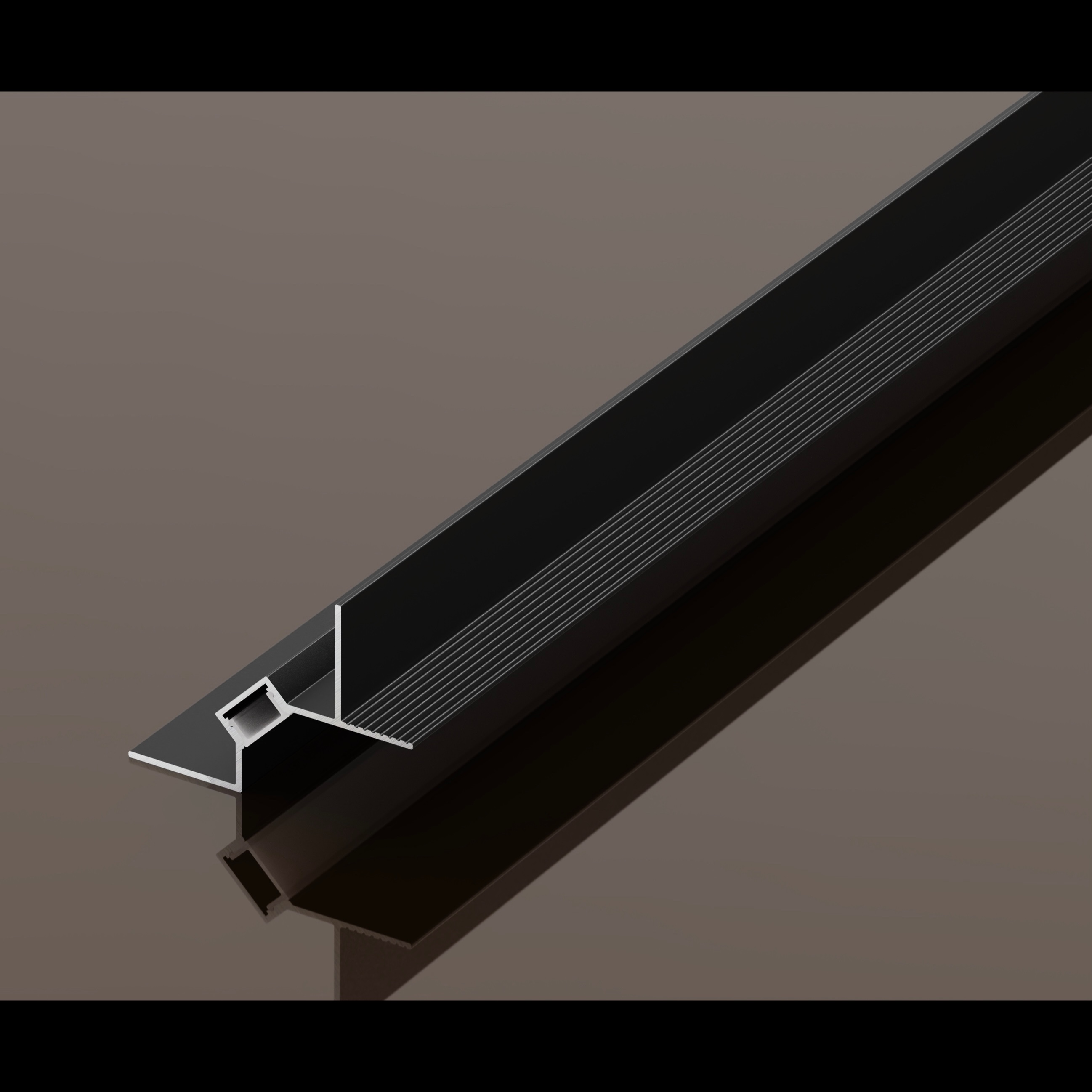
A cornice announces itself. It's a raised, decorative band that sits proudly at the ceiling line, and however elegant the pattern, it's still an object the eye registers before anything else in the room. The XF5 takes the opposite approach: instead of adding a trim, it subtracts one. A single hairline recess replaces the raised moulding β€” and where a cornice says "look at this junction," the shadow gap says nothing at all. The wall simply stops, and the ceiling simply begins.

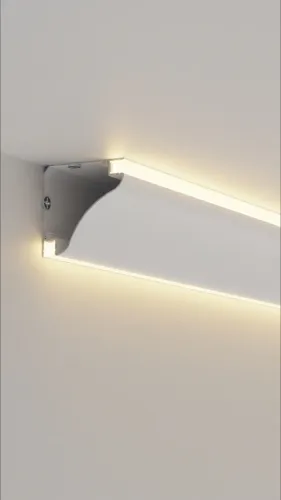
That quietness is what makes the lit version so effective. Fit a warm white LED strip into the XF5's internal channel and the same invisible line becomes the room's light source β€” a soft wash spreading from the ceiling edge with no fixture, no downlight, no visible slot to trace it back to.

The line disappears; only the glow stays. Because the LED strip sits fully inside the profile's internal channel, there is nothing to see at the junction itself, lit or unlit β€” only a soft, sourceless wash spreading across the ceiling once the strip is switched on.

Cornice vs. Shadow Gap

Two ways to finish the same junction β€” one adds, the other removes:

Traditional Cornice

A raised, decorative moulding that projects from the wall or ceiling. It draws the eye to the junction itself and adds visual weight and pattern to the room β€” often the intended effect in classical or ornate interiors.

XF5 Shadow Gap

A recessed hairline that removes the junction from view rather than decorating it. The ceiling and wall read as two quiet, separate planes β€” the preferred approach in minimalist and contemporary interiors.

Why It Works This Way

πŸ«₯

Genuinely Invisible Source

The LED strip sits entirely inside the profile's internal channel β€” from inside the room, there is no fixture, slot, or hardware to spot, only the light it casts.

βœ’οΈ

One Line, Not a Trim

A hairline recess reads as an edge, not an object β€” it removes visual weight from the ceiling line instead of adding a decorative band to it.

πŸŒ—

Works With or Without Light

Fitted with an LED strip, it's a light source. Left empty, it's still a complete architectural detail β€” the recess doesn't depend on the light to justify itself.

🎚️

Warm or Cool, Your Choice

Warm white strips give a soft residential wash; neutral or cool white suit kitchens and workspaces. Tunable white strips are compatible if the temperature needs to change.

πŸ“

Reads the Same in Any Room Size

In a small room, it lightens the ceiling line; run around a large open-plan space, the same line reads as a calm, continuous boundary.

πŸͺ΅

Neutral by Design

The line itself carries no style. Paired with timber, stone, or soft furnishings it reads as warm and residential β€” the finish around it sets the mood, not the profile.

Not just for minimalist interiors. The shadow gap's neutrality is what lets it sit comfortably in a warm, homely room as easily as a stark contemporary one β€” the character comes from the light temperature and finishes around it, not from the profile itself.

Applications

🏠
Living & Dining Ceilings
πŸ›οΈ
Bedroom Perimeter Glow
🏨
Hotel Guest Rooms
🍽️
Restaurant Ceilings
🏒
Reception & Lobby Areas
πŸ–ΌοΈ
Minimalist Feature Walls
πŸ›‹οΈ
Compact Apartment Interiors
πŸ›οΈ
Premium Retail Interiors

Frequently Asked Questions

Why do designers choose a shadow gap over a cornice or ceiling moulding?
A cornice or moulding adds visual weight to a room β€” a raised, decorative profile that draws the eye to the junction itself. A shadow gap does the opposite: it removes the junction from view by turning it into a thin dark recess rather than a raised trim. Contemporary and minimalist interiors favour the shadow gap because it keeps the ceiling line quiet, letting other elements in the room carry the visual interest instead.
How is a ceiling lit by the XF5 different from one lit by a downlight or cove light?
A downlight is a visible point of brightness in the ceiling itself. A cove profile hides its light source inside a raised soffit or step in the ceiling plane. The XF5 hides its LED strip inside a hairline recess at the wall-ceiling junction β€” from inside the room, there is no fixture, no visible slot, and no raised ceiling feature to see. Only a soft wash of light appears to come from the edge of the ceiling itself.
Does the shadow gap look too industrial or minimal for a warm, homely interior?
No. The line itself is neutral β€” its character comes from the light and finish around it. Paired with a warm white LED strip, timber flooring, and soft furnishings, the same recess reads as calm and residential rather than industrial. The shadow gap removes visual clutter at the ceiling line; it does not dictate a cold or minimal palette for the rest of the room.
Can the XF5 shadow line be used without any LED strip fitted, purely as a design detail?
Yes. Many projects specify the XF5 purely for the recessed line itself, with no LED strip fitted at all. The dark hairline gap at the junction still reads as a deliberate, minimalist detail on its own, replacing the visual weight of a cornice without adding any lighting scope to the project.
Does a shadow gap ceiling detail suit small rooms, or only large open-plan spaces?
It works well in both, for different reasons. In a small room, removing the visual weight of a cornice and replacing it with a thin recessed line reduces clutter and can make the ceiling feel higher. In a large open-plan space, the same continuous line running the full perimeter reads as a deliberate, calm boundary between wall and ceiling planes.
What colour temperature of LED strip suits the XF5 for a residential ceiling glow?
Warm white (around 2700K–3000K) is the most common choice for a residential ceiling wash, as it reads as soft and ambient rather than clinical. Neutral or cool white strips are sometimes used in kitchens or workspaces where a crisper light is preferred. Tunable white (CCT) strips are also compatible if the colour temperature needs to change through the day. The strip is selected and fitted separately from the profile.