A Profile Whose Whole Job Is to Go Unnoticed
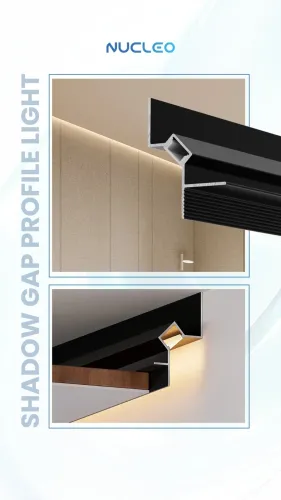
Most lighting hardware is designed to be seen — a fixture, a downlight, a strip run along a visible edge. A shadow gap profile works the opposite way: the aluminium disappears entirely into the finished surface, and only a thin recessed line of light remains, making the wall and ceiling appear to float apart at the junction. The catch is that achieving this illusion has traditionally meant carving out a deep recess — 50mm or more — which plenty of real ceiling voids and plaster builds simply don't have to spare.
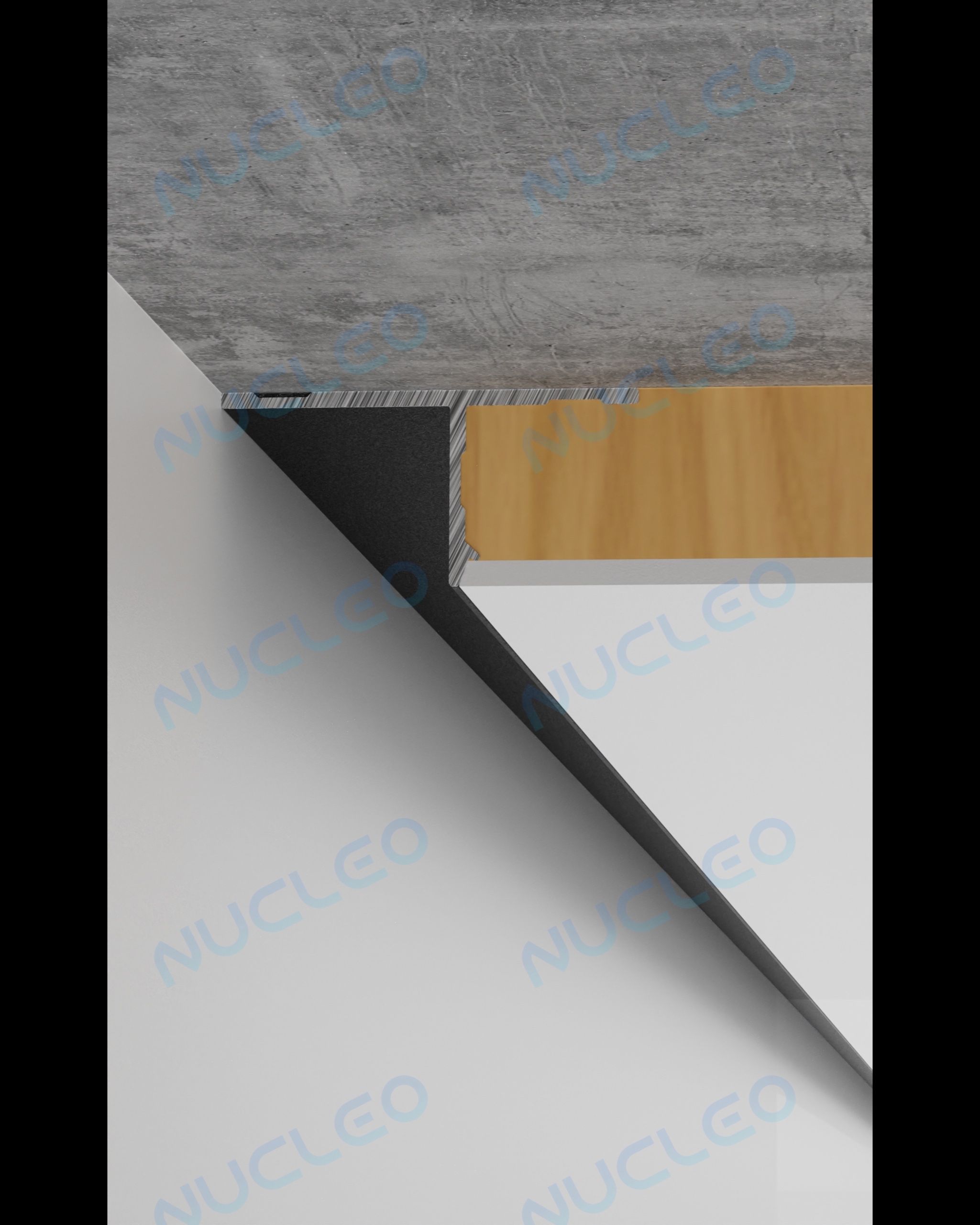
The NLP-XF2 was built around that constraint. At 11.3mm wide and 20.5mm deep, it's a T-shaped aluminium section slim enough to sit inside shallow plaster and gyp board builds, yet it still produces the same recessed shadow line as a far bulkier profile. The internal channel is left bare — no diffuser — so the strip inside reads as a crisp, defined line rather than a soft wash, which is usually the effect a shadow gap detail is chosen for in the first place.
Depth Is a Site Constraint, Not a Design Choice
Architects rarely choose a shallow shadow gap over a deep one for aesthetic reasons — the visual result is nearly identical either way. What decides it is what's actually available above the ceiling or behind the wall finish. Thin slab builds, low-headroom fit-outs, and tight gyp board partitions can't take a 50-60mm recess no matter how good it might look on paper. The NLP-XF2 exists for exactly that gap between what a design wants and what a site allows — the same floating-line effect, delivered in a section a fraction of the usual size.
Where the Recessed Line Goes
Wall-Ceiling Junctions
Perimeter shadow lines in rooms where the ceiling void or bulkhead depth is limited.
Thin Panel Joints
Between lightweight cladding or laminate panels where a deep recess isn't an option.
Feature Wall Accents
A slim vertical recess on a flat feature wall, adding definition without visual bulk.
Shallow False Ceilings
Low-drop false ceilings in apartments and offices where a deep cove would eat into headroom.
Wardrobe & Cabinet Lines
Shadow lines along cabinetry and wardrobe fascias, where section size matters as much as effect.
Renovation Projects
Existing structures with fixed slab-to-ceiling clearance, where a slim profile is the only fit.
Goes In Before the Finish Coat, Like Any Plaster-In Profile
Installation sequence doesn't change just because the section is smaller: the NLP-XF2 is fixed to the substrate — masonry, stud framing, or GRG bead — before plastering or boarding starts. Its wide T-base sits embedded as the finish is worked around it, while the narrow front stem and slot stay exposed. Being lighter and slimmer than a deep-section profile means less handling effort along long ceiling runs, and the smaller footprint needs less jointing compound to finish flush. The LED strip only goes in once the surrounding plaster work and its dust are done.
Key Features
11.3mm x 20.5mm Section
Fits shallow plaster and gyp board builds where a deeper cove or shadow gap profile has no room to sit.
T-Shaped Keying Base
The wider base embeds into the plaster or board finish, anchoring the profile without an oversized visible section.
Bare Channel, No Diffuser
Produces a sharp, well-defined line of light rather than a diffused wash — suited to the profile's compact scale.
Lightweight at 76g/m
Easier to lift, hold overhead, and fix along long ceiling runs than a heavier deep-section profile.
Anodised Aluminium Body
Dimensionally stable and corrosion-resistant, compatible with plaster, gypboard, and cement render substrates.
Cuts and Mitres On Site
Trims cleanly with a mitre saw for any room dimension, including internal and external mitred corners.
Applications
Residential Interiors
Living rooms and bedrooms with shallow ceiling voids needing a slim shadow line
Compact Offices
Low-headroom commercial fit-outs where a deep cove would compromise ceiling height
Apartments & Renovations
Fixed slab-to-ceiling clearances where only a slim profile physically fits
Restaurants & Cafés
Ceiling perimeter lines that add ambience without an oversized bulkhead
Wardrobes & Cabinetry
Furniture-scale shadow lines along fascia edges and cabinet fronts
Feature Walls
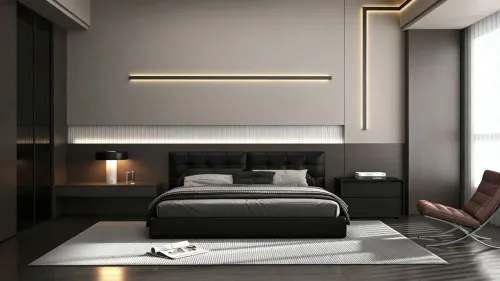
Slim vertical or horizontal accent lines on TV walls and entrance walls
Hotel Guest Rooms
Perimeter ceiling lines where ceiling drop is kept to a minimum for headroom
Retail Fit-Outs
Compact display and fixture edges where a slim recessed line suits the design
Frequently Asked Questions
Fit the Line Into a Space That Has None to Spare
Contact Nucleo for the NLP-XF2 Shadow Gap Profile — dimensions, samples, and technical support available pan-India.