The One Detail Most Interiors Never Question
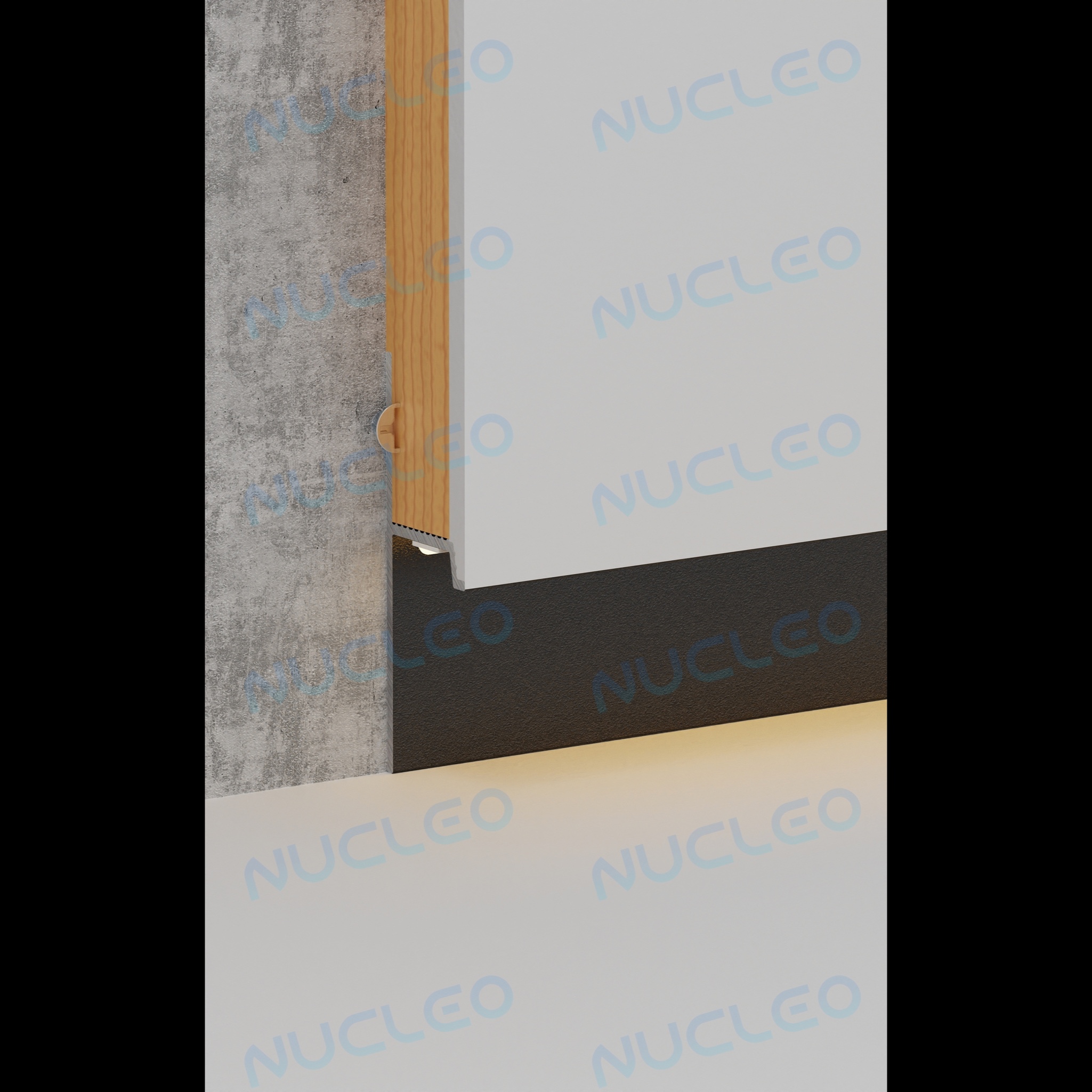
Skirting boards get fitted almost automatically — a strip of timber, PVC, or MDF run along every wall base without much thought, because that's simply how the floor-wall joint has always been finished. The NLP-XF17 questions that default. It's a T-shaped aluminium channel that gets plastered into the wall itself before the finish coat goes on, so once the room is complete, there's no board to see at all — only a slim, precise recess exactly where the joint sits.
At 13.7mm x 42mm and 157 grams per metre, it's built noticeably heavier than a profile meant for ceiling height, because this is the one line in a room that takes contact every single day — footsteps, mop heads, vacuum cleaners, chair legs. The internal channel is left bare with no diffuser, so when a strip is fitted inside, the room gets a sharp, defined edge of light grazing the floor rather than a soft glow.
The Wall That Never Quite Touches the Floor
A skirting board visually anchors a wall to the floor — you see exactly where one ends and the other begins. Remove that board and replace it with a recessed line, and the opposite happens: the wall reads as a single continuous plane that appears to lift away from the floor instead of sitting on it. Switch on the LED strip inside the channel and that separation becomes literal — a thin edge of light runs beneath the wall, grazing the floor finish in front of it. It's the floor-level counterpart to a floating ceiling, and it isn't achievable with a surface-mounted board of any material.
Key Features
A Genuine Skirting Replacement
Plasters into the wall rather than sitting on top of it — the finished result has no raised strip anywhere along the run.
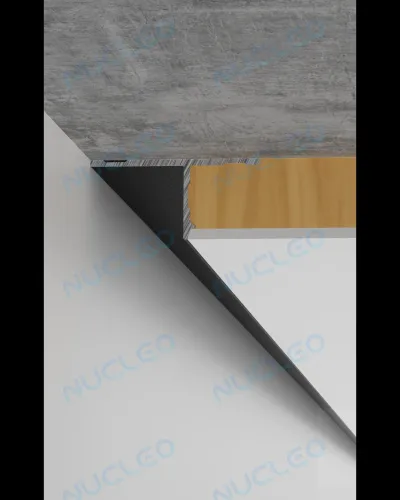
T-Shaped Plaster-In Flange
The wide base of the T-section keys into the wall finish, holding the channel dead flush with no visible screws or clips.
Bare Channel, Sharp Edge of Light
No diffuser is fitted, so an LED strip inside grazes the floor as a crisp defined line instead of a diffused wash.
Heavier Gauge, By Design
At 157g/m, it's built substantially stronger than a ceiling-level shadow gap section, to survive daily floor-level contact.
Runs the Full Perimeter
Mitred at internal and external corners so the recessed line continues unbroken around an entire room or corridor.
Site-Cuttable Aluminium
Cuts cleanly with a standard mitre saw for exact room lengths and precise corner joints during installation.
Fitted Before the Floor Goes Down
The channel is screwed to the wall substrate at floor level before plastering, screeding, or boarding is completed, with its flange embedded into the finish so the face sits flush with the wall once painted or plastered over. Flooring is then laid right up to the base of the profile, closing the joint completely. The LED strip is the very last thing to go in — it's fitted into the channel only once all finishing work and flooring are done, so it's never exposed to construction dust, paint overspray, or foot traffic during the build.
Where the NLP-XF17 Runs
Full Room Perimeter
Around the entire base of a room in place of a conventional skirting board — one continuous recessed line, corner to corner.
Feature & TV Wall Base
Under a feature wall or media wall, reinforcing the sense that the wall is a single unbroken plane down to the floor.
Below Built-In Cabinetry
Along the base of wardrobes and fitted joinery, so the units read as visually detached from the floor.
Corridors & Staircases
Long continuous runs that double as a low-level guide line, following the rake of a staircase where needed.
Applications
Residential Interiors
Living rooms and bedrooms finished without a visible skirting strip anywhere
Hotel Corridors
Continuous guest-floor runs where the line also serves as ambient wayfinding
Retail & Showrooms
Plinths and feature walls with a grazing floor edge instead of a visible base trim
Commercial Offices
Reception and boardroom walls kept reading as one continuous plane to the floor
Restaurants & Bars
Perimeter floor lines that add low ambience without adding another fixture
Staircase Bases
A continuous skirting-level line that tracks the rake of a stair wall
Wardrobe & Joinery
Under fitted cabinetry, visually lifting units off the floor with a light edge
Galleries & Museums
Display walls where a raised skirting board would interrupt a clean composition
Frequently Asked Questions
Finish the Floor-Wall Line Without a Board
Contact Nucleo for the NLP-XF17 Skirting Shadow Gap Profile — dimensions, samples, and technical support available pan-India.